

How to compare screenplay drafts
A useful screenplay comparison tracks story consequences, not only changed words. Review versions, scenes, characters, and artifacts together.
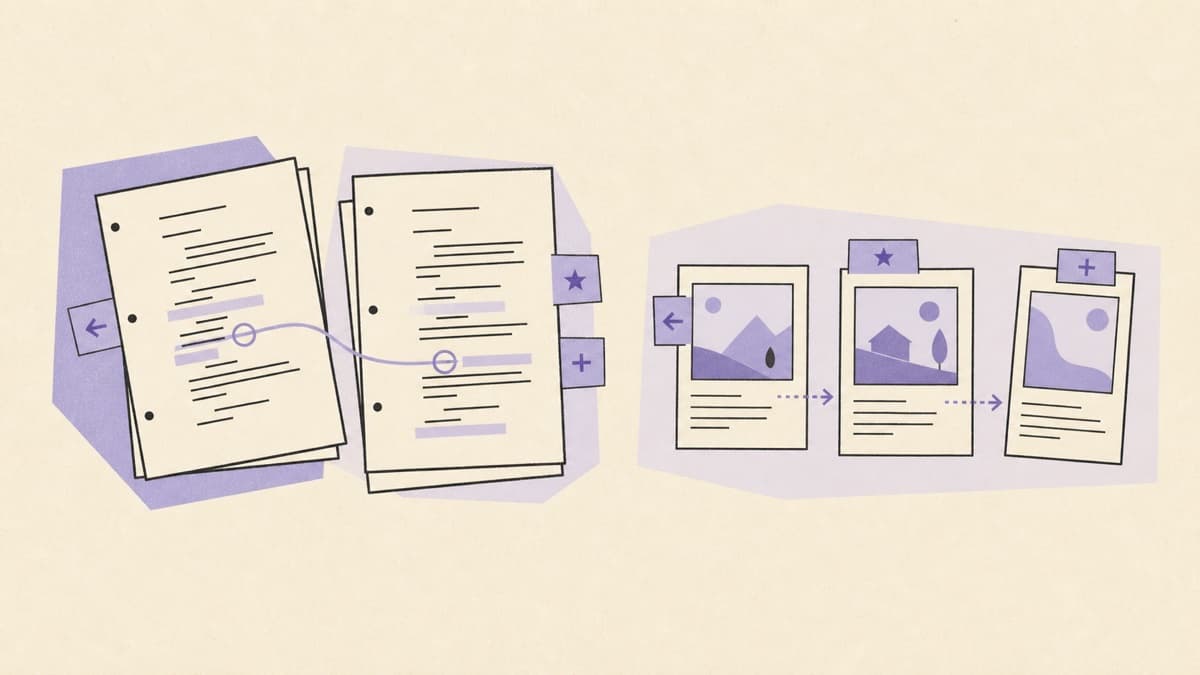
Comparing screenplay drafts is not the same as running a text diff. A line can change without affecting the story. One removed scene can alter a character's motive, a relationship, the pace of an act, and every report built from the old draft.
A useful comparison starts with source control, then asks what the revision changes for the audience and the people developing the project.
Label the source before reading
Record:
- Draft date and writer-provided label.
- Page count.
- File identity or hash when available.
- Who supplied the draft.
- The prior version it should be compared with.
- Any stated goals for the revision.
Do not overwrite the old PDF. Keep immutable source versions. The team should be able to reconstruct which material was read, covered, approved, or shared.
Compare in four passes
Pass 1: Structural movement
Look for added, removed, reordered, or substantially rewritten scenes. Ask:
- Did the opening promise change?
- Does the inciting event occur earlier or later?
- Did a sequence gain or lose a turning point?
- Did the climax change in action or meaning?
- Does the ending answer a different dramatic question?
Scene order often matters more than the number of changed lines.
Pass 2: Character agency and relationships
Track who makes the decisions that move the story. A rewrite may give a protagonist more dialogue while quietly transferring the decisive action to someone else.
Then inspect relationships. Which scene now establishes trust? Was a betrayal better prepared or merely explained? Did removing one exchange erase the reason a later reconciliation works?
Pass 3: Information and continuity
List material changes to what the audience and characters know. This is especially important in mysteries, thrillers, and episodic work.
Check renamed characters, changed locations, timeline details, ages, injuries, props, and other continuity facts. Small edits can create large downstream conflicts.
Pass 4: Experience and intent
Read the revised sections in sequence. A diff can identify change but cannot tell you whether tension, comedy, tone, or emotional effect improved.
Return to the stated revision goal. If the goal was to clarify the protagonist's motive, does the new draft create clearer behavior, or only more explanation?
A revision comparison template
BASE VERSION:
NEW VERSION:
STATED REVISION GOAL:

STRUCTURAL CHANGES:
- Change:
  Scene evidence:
  Story consequence:

CHARACTER CHANGES:
- Character:
  New choice or information:
  Arc consequence:

RELATIONSHIP CHANGES:

CONTINUITY CHANGES:

PACING / TONE CHANGES:

UNRESOLVED QUESTIONS:

ARTIFACTS TO REFRESH:
- Coverage
- Character breakdown
- Series bible
- Other:
Decide what must be regenerated
Not every revision requires a new artifact. Fixing spelling should not force a new Coverage run. Changing the ending probably should.
Use a materiality test:
- Did the plot, character, relationship, or story fact change?
- Does the existing artifact make a claim that is no longer true?
- Would a decision-maker reach a different conclusion from the new material?
- Is the cost of a stale answer greater than the cost of refreshing it?
Compare the conclusion, not only the document
When both drafts have Coverage, compare score movement and written rationale. The important question is why the evaluation changed.
A stronger character score may come from one new decision. A lower pace score may be the intentional cost of adding emotional depth. Revision is a system of tradeoffs. The comparison should make those tradeoffs visible.
The goal is not to declare that the newest draft is automatically better. It is to understand what changed, what that change accomplished, and which working knowledge must now be updated.
Keep every draft connected
Add a screenplay revision as a new source version in Prescene and compare what changed without losing the earlier analysis.