

Above-the-line vs. below-the-line film costs
Above-the-line costs cover key creative deals; below-the-line costs cover crew and physical production. Learn where common film expenses belong.
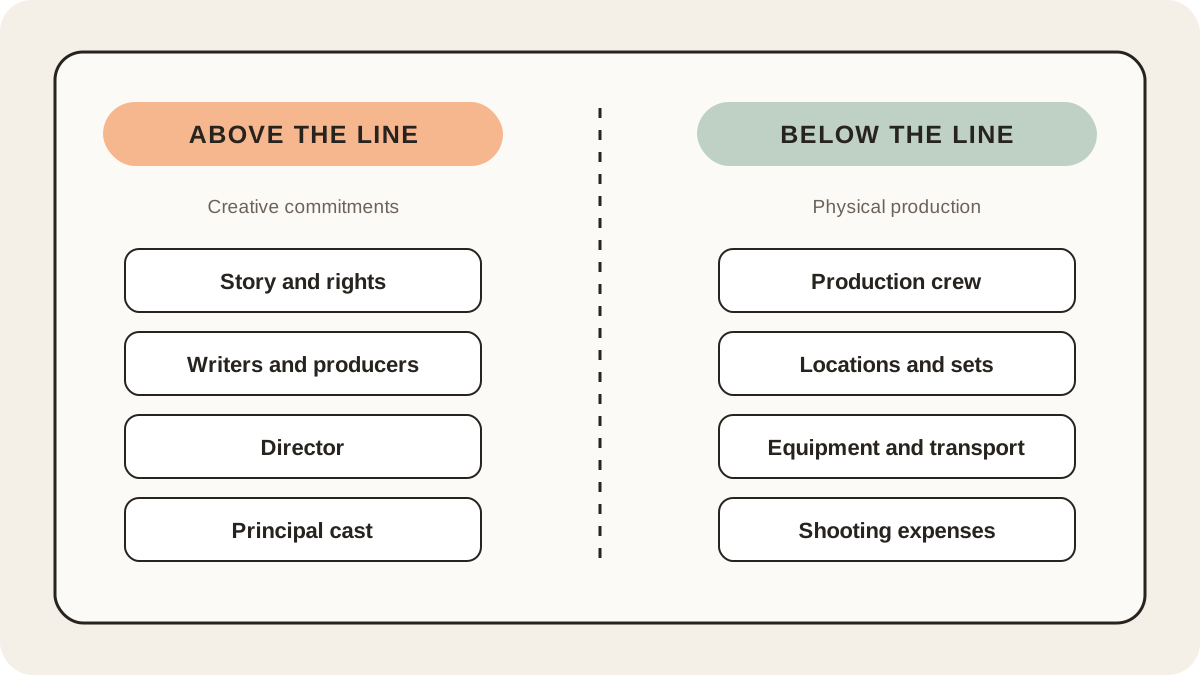
Above-the-line costs generally cover story rights and the project's key creative deals, including the writer, producer, director, and principal cast. Below-the-line costs generally cover the crew, equipment, locations, materials, and labor required to shoot the project. The split makes a budget easier to read, but it is an accounting convention, not a universal test of status or importance.
Use the categories as a starting point, then follow the chart of accounts, contracts, guild rules, incentive rules, and accounting practices that govern the production. A line item can be treated differently across budgets or programs.
The difference at a glance
| Budget area | Usually includes | Main planning question |
|---|---|---|
| Above the line | Story and rights, writers, producers, director, principal cast | Which creative commitments and negotiated deals must be in place? |
| Below the line | Production staff, assistant directors, crew, equipment, sets, locations, wardrobe, transportation, and shooting expenses | What people, time, materials, and logistics are required to make the project? |
| Post-production and other accounts | Editorial, sound, music, visual effects, insurance, fringes, contingency, overhead, and delivery | How does this budget's chart of accounts separate costs outside the core ATL and shooting sections? |
The third row matters. In many professional budgets, post-production, insurance, fringes, contingency, and similar accounts appear in their own sections rather than being collapsed into one broad definition of BTL.
Turn the split into a first-pass Finance Plan
Prescene's Finance Plan Workflow turns an analyzed screenplay into a reviewable production-cost scenario. You can set a target budget range or ask Prescene to estimate where the script naturally sits. The plan then applies one consistent structure across the project instead of producing a single unsupported total.
The Finance Plan includes:
- work framing for the project type, production approach, union assumption, and budget tier;
- script-derived page, scene, character, and location counts, plus estimated shoot, prep, and post ranges;
- low and high estimates for ATL, BTL production, post-production, contingency, and insurance;
- the assumptions and comparable productions used to frame the range;
- an incentive scenario with separate ATL, BTL, and post eligibility assumptions;
- ranked cost drivers, cost-saving opportunities, and cost-overrun risk flags; and
- scene references connecting major drivers and savings back to the screenplay.
The plan remains editable. Changing an estimate or assumption recalculates the category subtotals, fringes, estimated incentive, and net range. A producer can also re-estimate the plan against a different target range rather than rebuilding it from scratch.
What usually sits above the line?
Above-the-line accounts commonly include:
- literary property, underlying rights, and option or acquisition costs;
- screenwriters and other writing services;
- producers and certain producing services;
- the director; and
- principal cast and other negotiated featured performers.
These costs are often shaped by individual deals and may be committed before the shooting plan is final. That does not mean every ATL amount is fixed or that ATL is always the largest part of a budget. Cast schedules, contingent compensation, rewrites, travel, and contract terms can still affect the production plan.
What usually sits below the line?
Below-the-line production accounts commonly include:
- unit production management and assistant directing;
- background actors, stand-ins, and many day players;
- camera, grip, electric, sound, art, construction, props, wardrobe, hair, and makeup;
- locations, stages, equipment, expendables, transportation, lodging, and catering;
- stunts, practical effects, specialty units, and safety requirements; and
- other crew and physical-production expenses created by the schedule.
BTL is where the screenplay's logistical demands become visible. A night exterior, company move, crowd scene, period setting, child performer, animal, stunt, or weather dependency can add labor, equipment, permits, time, and risk across several departments.
The California Film Commission's qualified-expenditure chart offers a useful real-world example. It places directors and principal performers in ATL categories, while assistant directors, unit production managers, stand-ins, and background actors appear in BTL categories. That classification applies to the program's rules and should not be treated as a universal chart of accounts.
The line is not a measure of prestige
Department, contract coverage, and ATL or BTL classification are different questions. The Directors Guild of America, for example, represents directors, assistant directors, and unit production managers. A budget can still place the director above the line and the assistant director and unit production manager below it.
The same distinction appears among performers. Principal cast may sit above the line while background actors and stand-ins sit below it. Producer credits can also require closer attention because the title, services performed, deal structure, and applicable rules are not always identical.
Classify the expense, not the perceived seniority of the person.
Why the distinction matters
It makes the topsheet readable
Separating creative commitments from physical production lets producers, financiers, accountants, and department heads see what is driving a planning range. It also makes two scenarios easier to compare when one changes cast or rights and the other changes schedule or production method.
It shows where schedule changes spread
Many BTL costs are sensitive to shooting days, locations, company moves, overtime, and department requirements. Cutting one shooting day can affect several accounts, but it does not reduce every account by the same percentage. A schedule change needs to be traced through the actual plan.
It supports contract and fringe calculations
Rates, pension and health contributions, payroll taxes, residual structures, and working-condition rules depend on the person, service, agreement, place, and production type. Use current official sources such as the WGA Minimum Basic Agreement, SAG-AFTRA theatrical contracts, DGA agreements and rates, and IATSE Basic Agreement resources when building assumptions. A budget category alone does not determine the applicable rate or obligation.
It helps evaluate incentives without oversimplifying them
BTL does not automatically mean incentive-qualified, and ATL does not automatically mean excluded. Eligibility can depend on residency, work location, vendor status, compensation caps, production type, and the specific program. Check the current jurisdiction rules and obtain specialist advice before including an incentive in a finance plan.
It improves scenario planning
The split helps isolate different decisions. Attaching a director or principal actor primarily changes creative commitments, but it may also affect travel, schedule, locations, insurance, and crew. Adding an action sequence primarily expands physical production, but it can also change cast days, rewrites, post-production, and contingency.
A practical Finance Plan review
- Confirm the script version and purpose. Record the exact draft, format, intended production location, and whether the plan supports development, packaging, financing, or production.
- Choose the target-range approach. Enter a budget range when the project has a constraint, or run an unanchored scenario to see where the screenplay's current demands place it.
- Review the framing before the totals. Check the work type, production approach, union assumption, tier, shoot days, and schedule ranges. A wrong framing assumption can distort every department.
- Inspect ATL, BTL, and post separately. Confirm that creative deals, physical-production departments, and post needs match the project. Look for missing requirements and padded departments.
- Trace the levers to the script. Review the scene references behind major drivers, savings opportunities, and risk flags. Test how a different cast assumption, location approach, schedule, or set piece changes the range.
- Replace estimates with current evidence. A production accountant and department heads can turn the scenario into a working budget using schedules, bids, deals, fringes, and current jurisdiction rules.
If the underlying concepts are new, start with the Finance Plan overview. Keep the script breakdown, shooting schedule, and budget connected. They are different views of the same production plan. The line producer guide explains who typically coordinates those tradeoffs.
Important planning note
This guide explains early planning concepts. It is not accounting, tax, legal, or investment advice. Before relying on a working budget, have a qualified production accountant and the appropriate legal, tax, payroll, insurance, union, guild, and incentive specialists review the assumptions that apply to the production.
Create a Finance Plan from your screenplay
Set a target range or let Prescene estimate where the script naturally sits, then review tier-anchored ATL, BTL, post, assumptions, cost drivers, savings, and risk flags.