

What does a line producer do?
A line producer turns creative intent into an executable production plan, then manages the budget, schedule, people, vendors, and operational tradeoffs.
A line producer turns a screenplay and creative plan into an executable production. They develop and manage the budget and schedule, hire or coordinate key production personnel, negotiate practical resources, monitor cost and progress, and help leadership make tradeoffs throughout the project.
The exact scope varies by production, country, agreement, budget tier, and company structure. The role may overlap with a unit production manager, production executive, or producer, but the line producer is commonly the bridge between creative intent and day-to-day physical production.
Pre-production: build the operating plan
The work begins with the current screenplay version and its production breakdown. The line producer collaborates with the assistant director, production manager, accountant, department heads, locations, casting, legal, insurance, and other specialists to test what the pages require.
Typical responsibilities include:
- Reviewing the script breakdown and identifying high-impact assumptions.
- Building or supervising the detailed budget and cash-flow plan.
- Testing locations, stages, travel, incentives, crew base, and production tier.
- Working with the assistant director on the shooting schedule.
- Soliciting vendor quotes and negotiating crew, equipment, and facility arrangements.
- Planning insurance, payroll, fringes, permits, safety resources, and contingency with qualified professionals.
- Presenting options when the creative plan and available resources do not align.
The most valuable early question is often not "What does this cost?" but "Which creative and logistical choices make the cost move?"
Production: control cost, time, and change
During principal photography, the line producer monitors the plan against actual production. They review cost reports, schedule progress, purchase commitments, overtime, location or equipment changes, and emerging risks.
When weather, performance, equipment, or a creative decision changes the day, the line producer helps model the consequences. Cutting one scene may not save money if the cast, set, and equipment are already committed. Moving another can create a new company move or cast day. Good line producing connects each choice to the whole system.
Post-production and delivery
Depending on the project, the line producer may continue to supervise post-production spending, facilities, vendors, music, visual effects, deliverables, insurance, and closeout. They track what remains committed, what is changing, and what must be delivered under the applicable agreements and distribution plan.
Line producer, producer, and assistant director
| Role | Primary operational focus |
|---|---|
| Producer | Overall project, rights, creative and business leadership, financing and relationships |
| Line producer | Budget, resources, production operations, cost control, and cross-department tradeoffs |
| Assistant director | Shooting schedule, set operations, daily execution, coordination, and safety communication within their role |
These are simplified distinctions. Real productions assign responsibilities through contracts, agreements, company policy, and the people involved.
From script to the first finance conversation
Before a detailed working budget exists, a line producer may review a scenario built from screenplay evidence:
- The exact script version and format.
- Cast scale, locations, pages, and proposed production pattern.
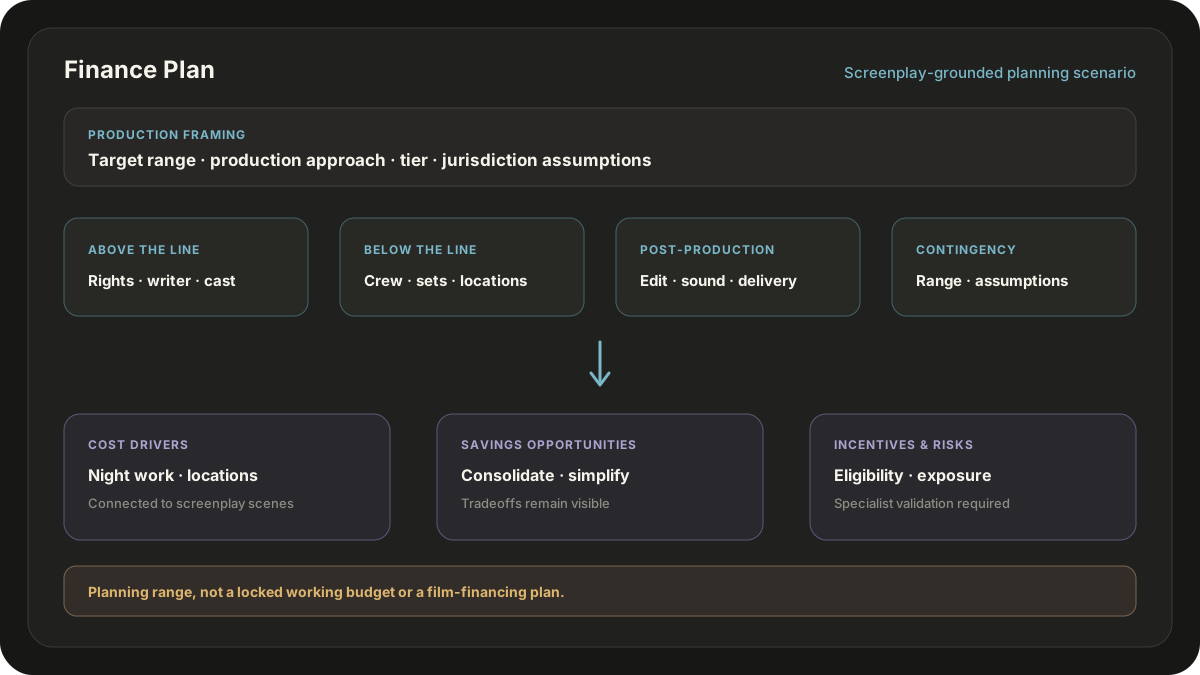
- Above-the-line, below-the-line, post, contingency, and other broad buckets.
- Major cost drivers and savings opportunities.
- Incentive assumptions and jurisdiction questions.
- Comparable productions and risk flags that need research.
Prescene's Finance Plan is designed for this early conversation. It is an editable, tier-anchored scenario, not a final working budget, a quote, or a plan for raising film financing.
What makes a strong line producer
The role combines financial discipline, negotiation, production knowledge, communication, and calm decision-making. Strong line producers expose assumptions early, keep records current, listen to department expertise, and present options with their cost, schedule, safety, and creative consequences.
They do not simply say no. They make the real choice visible: what the production can protect, what must change, and what new risk a compromise creates.
The connected planning sequence runs from script breakdown to shooting schedule and the above-the-line and below-the-line cost framework.
Give the line producer a grounded first pass
Prescene turns the analyzed screenplay into an editable Finance Plan with tier framing, cost drivers, savings opportunities, incentives, assumptions, and risk flags.