

How to build a beat sheet for a screenplay
A beat sheet maps the major turns of a screenplay before scenes harden into pages. Use this practical structure to test cause, choice, escalation, and change.
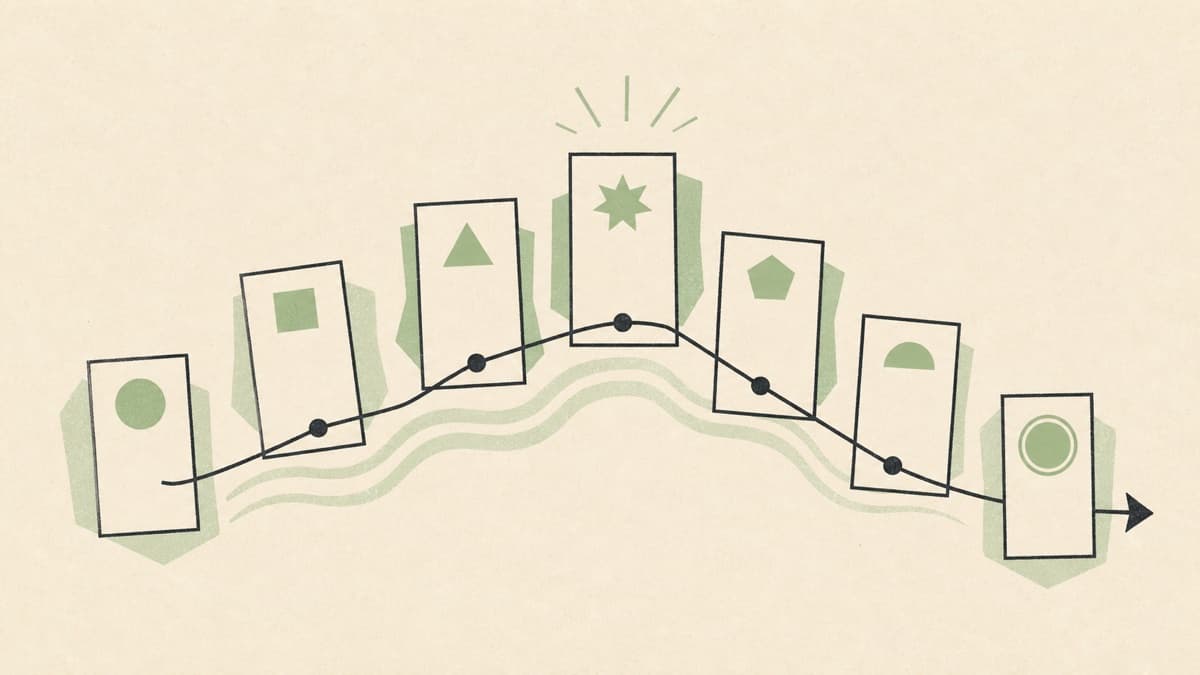
A beat sheet is a short list of the major events that change a story. It helps a writer test the shape of a screenplay before committing to a full scene-by-scene draft.
The useful unit is not a famous label such as "midpoint" or "all is lost." It is a change in the story: a character makes a choice, new information changes the plan, pressure increases, or a relationship crosses a line it cannot easily uncross.
Beat sheet, outline, treatment, and scene list
These documents overlap, but they answer different questions.
| Document | Main question | Typical level of detail |
|---|---|---|
| Beat sheet | What are the major turns? | One or two sentences per beat |
| Outline | How does the story progress? | Sequences, subplots, and major actions |
| Treatment | What does the full story feel like? | Prose account of the complete narrative |
| Scene list | What happens scene by scene? | Slugline, purpose, and action for each scene |
A beat sheet is useful early because it is cheap to change. Moving one paragraph is easier than rewriting twenty pages.
The eight questions every beat should answer
You do not need a fixed number of beats. You do need enough information to understand why the next event happens.
For each beat, write:
- Who acts? Name the character driving the moment.
- What do they want? State the immediate goal.
- What changes? Identify the event, discovery, or choice.
- Why now? Explain the pressure that makes the beat necessary.
- What does it cost? Show the risk, sacrifice, or new problem.
- What follows? Connect the beat to the next action.
- Which relationship moves? Note any shift in trust, power, or intimacy.
- How is the character different? Track a change in belief, strategy, or commitment.
If a beat cannot answer most of these questions, it may be a description rather than a dramatic turn.
A practical feature-film framework
Use this as a diagnostic scaffold, not a formula.
Opening condition
Show the protagonist's current life, the pressure already present, and the pattern that cannot continue forever.
Disruption
Introduce the event or opportunity that makes the old pattern unstable.
Commitment
The protagonist chooses a course of action. The story becomes harder to reverse.
Early progress
The plan appears to work, or the protagonist learns the rules of the new situation.
Reversal
New information changes what the protagonist thinks the story is about. A midpoint is useful when it changes strategy, not merely location.
Escalating cost
The original approach stops working. External pressure and internal weakness begin to reinforce each other.
Crisis choice
The protagonist must choose without a safe option. The choice reveals what has changed.
Final action
The protagonist acts from the new understanding, or fails to change and pays the cost.
New condition
Show the consequence. The ending should answer the dramatic question raised by the opening.
A simple beat-sheet template
Copy this structure into any document:
TITLE:
FORMAT / TARGET LENGTH:
CENTRAL DRAMATIC QUESTION:

BEAT NAME:
Character driving the beat:
Immediate goal:
What changes:
Pressure or obstacle:
Cost:
Resulting next action:
Relationship change:
Arc movement:
Repeat the beat block until the full chain of cause and effect is visible.
How to stress-test the sheet
Read only the line that says what changes in each beat. Does the story escalate, or does it repeat the same conflict?
Then read only the resulting next action. Does each beat cause the next one, or could the events be rearranged without consequence?
Finally, track the protagonist's choices. If the major turns happen to the character while someone else drives the action, the screenplay may have an agency problem.
When to leave the framework
Some stories are episodic, circular, fragmented, or deliberately unresolved. They still create expectation and change. Build a beat sheet that describes the actual contract with the audience instead of forcing the material into a three-act diagram.
The purpose of a beat sheet is not compliance. It is visibility. A useful sheet lets a writer and collaborator see the same story, point to the same turn, and revise the structure before the pages become expensive to change.
Turn the outline into pages
Write and format your screenplay in the free Prescene Screenplay Editor. When the draft is ready, analyze it for story intelligence.